Thermo-Electrical EMC Filter Design for Electrical Vehicles (TEVDEF)
In the powertrain of electric cars, high demands are placed on the inverters that generate the three-phase AC voltage for the electric motor from the battery’s DC voltage. They must be small, light, inexpensive and efficient. Additionally, the trend in the electric car industry is towards higher power, voltage and switching frequency. This results in high electrical and thermal loads on all components within the powertrain as well as higher radiated and conducted emissions. Passive filters are used to ensure that the electromagnetic emissions are below the target limit values. During operation, losses in the filter components can lead to their maximum temperature being exceeded (<120°C). The project includes the design and optimization of these filters. Innovative, combined thermal-electrical processes are to be used to solve the current problem of thermal overload of EMC filters and prevent possible vehicle failures. During the course of the project, a digital representation of the system (Digital Twin) will be developed to investigate and predict the system behavior using data-based methods.
This project was conducted in cooperation with Valeo eAutomotive Germany GmbH and its EMC department in the Powertrain Systems division. The project was supported by Guido Rasek at Valeo.
It was in collaboration with POLIMI with Mrs. Professor Flavia Grassi.
Funding: Freie und Hansestadt Hamburg (Valeo eAutomotive Germany GmbH till 30.09.2026)
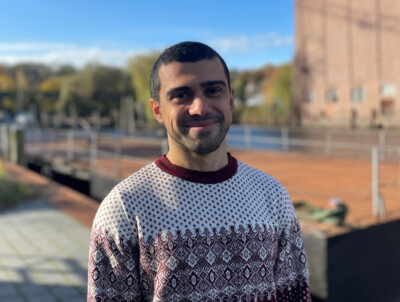
Contact: Lennart Bohl
Start date: 01.10.2023

Generation of an Adaptive Database in Combination with Methods of Machine Learning
The EU project PATTERN, a Marie Skłodowska-Curie Doctoral Network, stands for “European Doctoral Network Enabling Artificial Intelligence for Electromagnetic Compatibility.” It is funded by the Marie Skłodowska-Curie Actions of the European Union and brings together nine academic partners, including TUHH.
This project aims to develop an adaptive database in combination with machine learning methods to predict signal integrity (SI) and electromagnetic interference (EMI) as well as to optimize high-speed packages for discrete devices, in collaboration with NEXPERIA and Prof. Dr. Matthias Mnich from the Institute for Algorithms and Complexity (TUHH).
Funding: European Union / PATTERN – European Doctoral Network (MSCA) Enabling Artificial Intelligence for Electromagnetic Compatibility, Grant agreement ID: 101169295
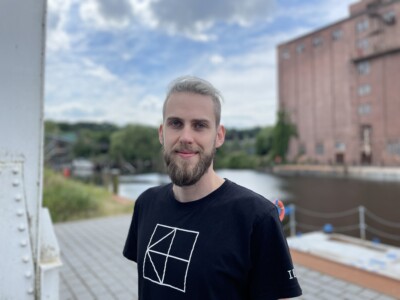
Contact: Nazim Talibzade
Start date: 03.11.2025


Automated Evaluation of Physic-and Data-Based Approaches for SI and EMI Optimization in Cable and Connector
The EU project PATTERN, a Marie Skłodowska-Curie Doctoral Network, stands for “European Doctoral Network Enabling Artificial Intelligence for Electromagnetic Compatibility.” It is funded by the Marie Skłodowska-Curie Actions of the European Union and brings together nine academic partners, including TUHH.
This project aims to automate and evaluate physics-based and data-based approaches for the prediction and optimization of signal integrity (SI) and electromagnetic compatibility (EMC) of cable and connector assemblies – in collaboration with Rosenberger and Prof. Dr. Matthias Mnich from the Institute for Algorithms and Complexity (TUHH).
Funding: European Union / PATTERN – European Doctoral Network (MSCA) Enabling Artificial Intelligence for Electromagnetic Compatibility, Grant agreement ID: 101169295
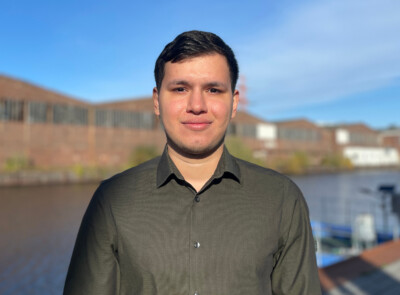
Contact: Mikheil Kvizhinadze, M.Sc
Start date: 03.11.2025